
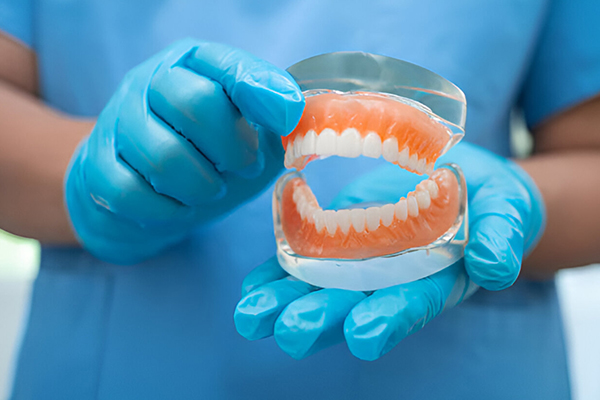
What Are Dentures?
Dentures (also known as false teeth) are appliances used as a replacement for missing teeth and tissues. They are artificial teeth that enable the normal functioning of the human mouth. Dentures are of two types – Complete & Partial. Complete dentures are advised when all the teeth are missing, and partial dentures are applied when some teeth are missing. They are custom-made especially for a set of teeth and the gum line.
Complete Dentures fit over the upper gums and roof, and on the lower teeth, placed like a horseshoe. They are conventional dentures and are removed during the night for cleaning.
Types of Dentures
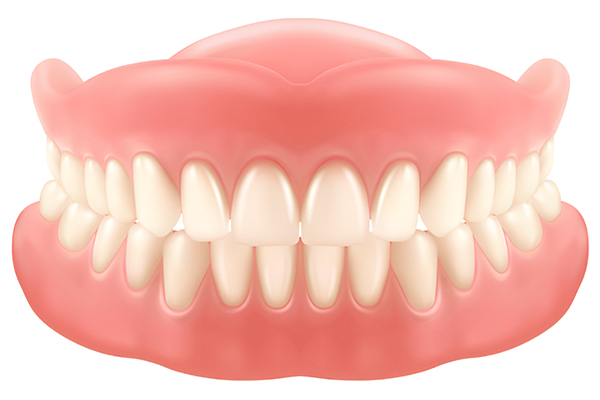
Complete Dentures
Porcelain crowns are fully metal-free, making them an ideal, biocompatible option for sensitive patients. These restorations use high-grade ceramic materials to rebuild damaged teeth fully, ensuring marginal integrity, a perfect seal, and excellent long-term gum health.
Crucially, the ceramic material perfectly mimics the translucency of natural enamel, eliminating the dark line often seen at the gumline of PFM crowns. This dedication to material purity and precision ensures a restoration that is both functionally superior and aesthetically flawless.
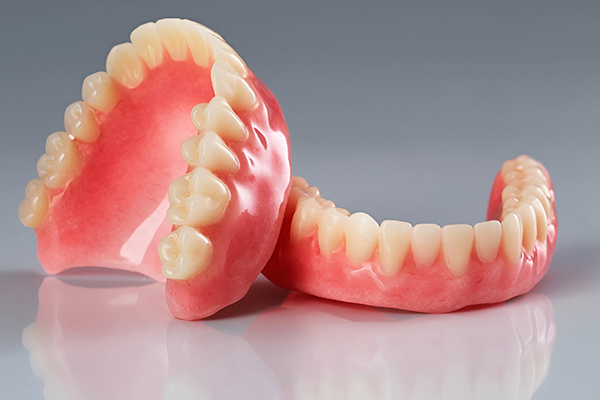
Partial Dentures
Metal crowns, fabricated from a high-tech ceramic, combine the durability of traditional materials with superior natural looks. They are the ideal modern solution for both front and back teeth, meeting high aesthetic needs. Zirconia offers unmatched chip resistance while being fully biocompatible for patient health.
Its exceptional strength means it can withstand the heavy biting forces of back molars without compromising on the natural translucency required for front teeth. This advanced material provides the perfect fusion of lifelong function and aesthetic perfection.
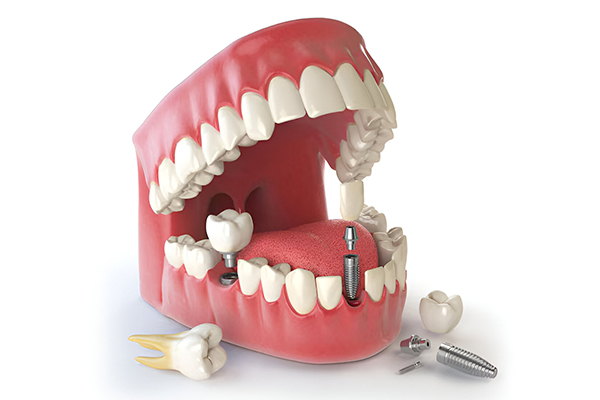
Implant-Supported Dentures
Porcelain-Fused-to-Metal (PFM) crowns offer an important, time-tested compromise, blending the strength of a durable metal base with an attractive porcelain exterior. This foundational metal core provides exceptional structural rigidity and resistance to fracture, making PFM crowns highly reliable for restoring posterior (back) teeth where biting forces are maximal.
While the porcelain layer offers good aesthetics, the metal base can sometimes be visible as a dark line at the gum margin, particularly if gums recede over time. Nevertheless, PFM crowns remain a cost-effective and resilient choice for achieving a functional, aesthetically improved smile.
What is the procedure involved in placing Dentures?

Step 1: Initial Consultation
The first step in getting a denture would be the initial consultation with the dentist. The dentist will perform an oral examination to find out what kind of denture would be required according to your needs. The dentist will help you decide the type of denture that would be required- Complete or Partial Denture.
Extraction or any other procedure before getting dentures, if needed, will also be determined during the initial consultation. All your questions related to your treatment, its cost, and outcome will be answered by your dentist.
Step 2: Taking of Impressions
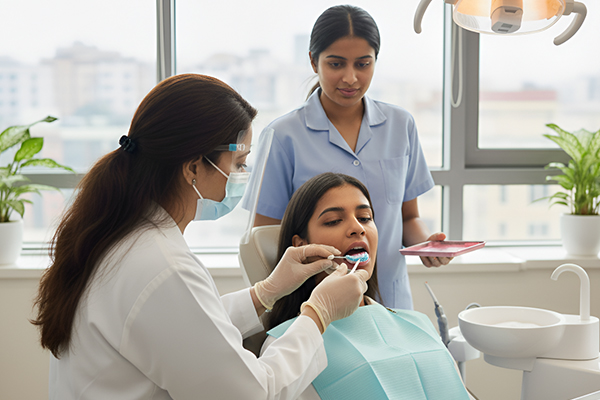
The dentist will take the impression of the jaw where teeth are missing. A plaster model will be made by pouring the impression with gypsum. A special acrylic tray will be made for your jaw model. To ensure proper fit, this special tray will be placed in your mouth, followed by border molding so that your denture stays in place and doesn’t fall off unwantedly.
Further, a final impression will be taken using the same special tray. Again, the impression will be poured with gypsum,m and acrylic plates will be made, followed by wax up rim. Now these wax rims with acrylic plates will be placed in your mouth to set the alignment of your future teeth. (This step is known asthe jaw relation) So that you can chew properly.

Step 3: Delivery of your Denture
Your initial comfort is our priority, and we will guide you through the expected adjustment period. It is normal to experience temporary soreness, increased saliva, and slight changes in speech.
We recommend starting with soft foods cut into small pieces and chewing slowly on both sides to help stabilize the denture. Remember that learning to speak and chew comfortably takes patience and practice; we have scheduled necessary follow-up appointments to check for any sore spots and make precise adjustments as your mouth adapts to your new smile.
Benefits Of Dentures
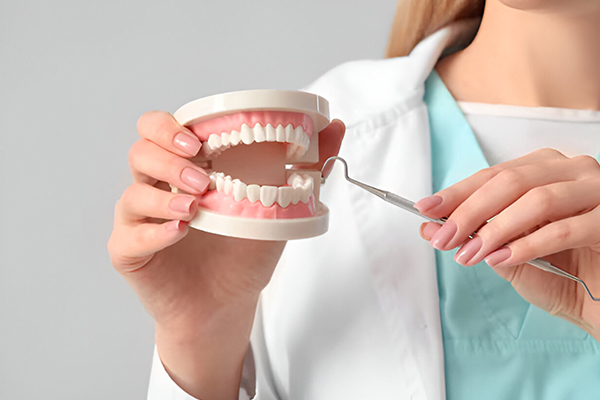
There are numerous benefits of dentures including:
- A natural looking smile with enhanced facial expression.
- Dentures help in enabling proper chewing and digestion.
- Improving of Speech.
- Restoring self esteem and confidence.
- They are an affordable solution for teeth replacement.
- They support facial muscles.
- They allow better mouth function activities,
including biting and chewing.
Alternatives Of Dentures
Before you get your dentures, you should be aware of the alternative options of dentures that are available. Let’s take a look at the alternatives:
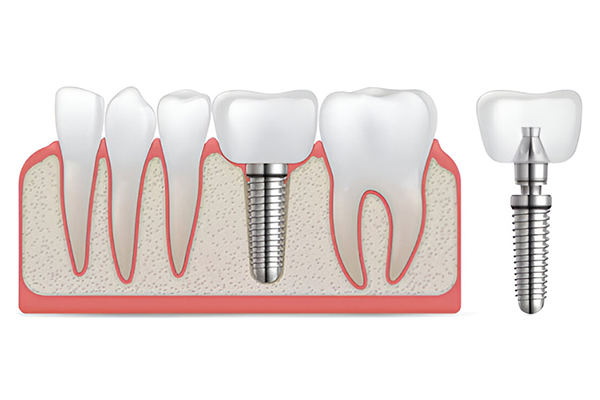
- Dental Implants: Implants are surgically inserted into your jawbone that mimic natural teeth. They are a great alternative to dentures if you’re missing a few teeth. Dental Implants are a reliable, comfortable, and long-term solution for missing teeth.
- Dental Bridges: Dental bridges offer a fixed, natural-feeling solution for missing teeth, anchoring to adjacent teeth for stability and functionality, presenting a comfortable alternative to removable dentures.
Myths About Dentures
- Myth – It’s difficult to eat with Dentures on
- Fact – There are no restrictions on what food to eat. Initially, you might be advised to intake a certain kind of diet, but with time, you will be able to eat whatever you wish, precautions are necessary.
- Myth – It is a Lifetime Solution
- Fact – If not taken proper care, the dentures may not last for long. Also, over a period, od they may start to wear down, loosen their natural appearance, and lose their chewing ability.
Your smile is safe with us
We are ready to care anytime
FAQ
What are the different types of dentures available at Deekshu Dental Implant Center?
We offer several types of dentures tailored to patient needs. These include Complete Dentures (for replacing all teeth in an arch), Partial Dentures (for replacing a few missing teeth), and Implant-Supported Dentures. Implant-supported options offer superior stability, ensuring the denture stays firmly in place without slipping.
How long will it take to get used to wearing new dentures?
It typically takes a period of adjustment to feel comfortable with new dentures. Initially, you may experience increased saliva flow, mild soreness, or difficulty speaking. With consistent wear and practice, most patients adapt within a few weeks. We recommend reading aloud and starting with soft foods to accelerate the adjustment period.
Can I eat all types of food with my new dentures?
Should I wear my dentures all day and night?
What is the process for getting a new set of dentures?
How soon can I be seen in case of a dental emergency?
We prioritize dental emergencies. Please call us immediately at +91 63790 05404. We will make every effort to fit you into the schedule as quickly as possible to manage pain and treat the urgent issue.